United by a shared commitment to patient-centred innovation, EBO proudly supported the Patients Association in its latest research exploring patient perspectives on the use of AI in healthcare. Read on to discover the findings.
Artificial intelligence is rapidly reshaping how care is delivered across the NHS from administrative workflows to clinical decision support promising increased efficiency, better diagnostics, and more responsive patient services.
But as AI systems become more common in care delivery, do patients feel protected, informed and confident in how these tools operate?
A new study conducted by the Patients Association and supported by EBO, explores how patients experience these changes and what they expect from AI regulation in healthcare. Surveying 243 patients in response to the Medicines and Healthcare products Regulatory Agency (MHRA) call for evidence, the research provides a timely and independent snapshot of patient perspectives on AI, innovation, regulation, safety, and trust in the NHS.
What emerges from the findings is a clear message: Patients support innovation but not at the expense of transparency, accountability, and safety.
Top Report Findings
¹ “The Patients Association response to the Medicines and Healthcare products Regulatory Agency’s call for evidence on Al regulation”, The Patients Association, February 2026, https://www.patients-association.org.uk/blog/patients-association-response-to-the-mhras-call-for-evidence-on-ai-regulation
Patients Call for Reform
Survey responses revealed broad concern about the current regulatory framework. Almost one in four participants (24%) felt that substantial reform was needed, highlighting worries about the fast pace of AI development and unclear lines of responsibility when things go wrong. Less than two in five respondents believed that current regulations adequately protect patient safety, with only 3% expressing strong confidence.
When asked what regulators should prioritise, 43% of respondents highlighted accountability when AI tools go wrong, while 30% emphasised transparency in how AI is used. These results show that patients view regulation not as a barrier to innovation, but as a necessary safeguard that ensures AI supports care safely and responsibly.
The Missing Link
A striking insight from the survey is the disconnect between AI use and patient awareness.
Nearly half of respondents (49%) believed that AI had already been used in their care, yet only 10% reported being clearly informed, and 39% said they were not informed at all. Meanwhile, 71% of patients said it is very important to be told when AI is part of their care.
Patients repeatedly called for plain-language explanations of when AI is used, how it influences decisions, and what limitations exist. They emphasised that transparency should not be limited to technical documentation or regulatory filings; it must be integrated into patient communication at every step.
They also called for broader visibility of AI tools, including their intended use, testing, and safety measures. Patients want AI to enhance their care, not obscure critical decisions behind opaque systems.
What Should Come First
Safety is a non-negotiable priority. Almost 89% of respondents prioritised safety over speed of access, with only 6% considering rapid deployment more important. Participants expressed concern that insufficient oversight could lead to serious errors, misdiagnoses, or harm.
As one respondent noted:
Clinical evidence supporting AI tools was also highlighted as essential. Patients want clear assurance that any AI system deployed in the NHS has been rigorously tested and validated before use.
What Matters Most to Patients
Patients stressed that AI should augment the role of healthcare professionals but not replace them. Proper oversight and human involvement are critical to maintaining trust, ensuring accuracy, and addressing bias. They also highlighted the need for AI tools to account for underserved communities, noting that algorithms must reflect diverse patient populations to avoid exacerbating health inequalities.
Responsibility and Clear Liability
Survey results underline the importance of shared responsibility. When asked where liability should lie in the event of an adverse outcome, patients most frequently cited healthcare providers (25%), followed by clinicians (20.6%), and manufacturers (17%). Very few respondents thought patients themselves should bear responsibility.
The results show that patients expect clear roles and accountability across the system. Whilst respondents believe that manufacturers must ensure tools are safe and effective, healthcare organisations must implement proper governance, clinicians must oversee care, and regulators must enforce standards. One participant summarised this succinctly:
The Key to Building Trust
A particularly positive finding is patients’ strong support for involvement in AI governance. Three-quarters of respondents (76%) said it is very important that patients are engaged in decisions about AI use. Patients emphasised that lived experience is essential to identifying risks that may not be evident from technical evaluations, ensuring tools are safe, fair, and aligned with patient needs.
This perspective presents a significant opportunity: by embedding patients into the design, evaluation, and monitoring of AI systems, the NHS can build tools that are both effective and trusted. Patient partnership ensures that AI supports care while respecting the human dimension of health services.
4 Priority Actions from Patients’ Voices
Always Tell Patients When AI Is Used
Patients strongly emphasised transparency. Only 1 in 10 reported being clearly informed when AI was used in their care, despite many believing it had been.
Public Register of Approved AI Tools
Patients said they should not have to guess whether AI is being used. They need a clear, accessible listing of AI systems.
Define Liability Before Deployment
Patients repeatedly raised concerns about blurred responsibility when things go wrong. They need to know who they can turn to.
Embed Patients in ΑΙ Governance
Patients want meaningful involvement, not token consultation. Therefore, a national framework for patient partnership in AI governance is essential to ensure their voices genuinely shape policy, design, implementation, and oversight.
How can EBO help?
The survey demonstrates that patients are not resistant to AI; they see its potential to improve diagnostics, reduce administrative burdens, and enhance access to care.
EBO bridges the communication gap in healthcare and places conversation at the heart of its solution. We help healthcare providers to automate patient facing processes end-to-end, thus releasing efficiency, increasing work capacity, reducing costs, and enhancing patient communication. See our range of solutions:
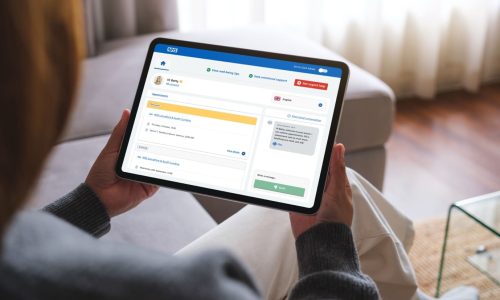
EBO’s Intelligent Patient Portal, surfaced through the NHS App, brings everything together in one accessible space.
The portal allows you to connect deeply and personally with your patients. From managing simple to complex self-assessments, consents and questionnaires to complete appointment management, the IPP reduces surging call volumes, extensive waiting lists, DNAs, and increases staff capacity. The fusion of an interactive Virtual Assistant with traditional portal functionality is the digital front door to the future of healthcare.
Let EBO be your partner in creating a healthcare future where effective communication leads the way in positive transformation. Discover the capabilities of EBO’s AI-powered solutions, designed to enhance your patient engagement. Take action now and be part of the solution! Contact us today or download our AI guide to find out more.
- Redefine Patient Engagement
- Build Meaningful Relationships
- Enhance Patient Access