How do we make neighbourhood care work consistently in practice, across very different local contexts, without adding complexity to already stretched services?
Across Integrated Care Systems, Trusts, and regional programmes, digital transformation leaders are confronting a shared set of constraints shrinking capacity, increasing demand, and persistent variation in how services are delivered locally.
We sit down with Nadia Kuftinoff, Healthcare Transformation Lead at EBO and former NHS Digital Transformation Lead, to explore what this means in practice across Trusts, ICBs, and neighbourhood teams.
From your experience across ICBs, Trusts, and innovation programmes, what are the biggest challenges NHS organisations face in delivering digital transformation?
Resource pressures are probably the biggest challenge.
Restructures, workforce pressures and financial constraints mean many digital leaders are being asked to manage broader portfolios with fewer resources. In some cases, experienced transformation specialists are leaving the NHS altogether, creating further pressure on those who remain.
At the same time, organisations must continue delivering safe and effective day-to-day services. Maintaining business-as-usual operations consumes significant time and energy, often leaving transformation teams balancing immediate operational demands against longer-term strategic priorities. The need for change has not diminished. The challenge lies in finding the capacity to deliver it.
Integrated care aims to create a more connected experience for patients. What still prevents that from happening consistently across systems?
A connected patient experience depends on effective data flows between systems, whether that’s feeding information into shared care records or enabling patient-generated data to populate clinical systems.
However, translating a data requirement into a fully operational solution can take time.
Interestingly, technology itself is rarely the primary barrier. More often, delays stem from competing priorities, development schedules, governance requirements or the complexities of working across multiple organisations with different needs and objectives.
What ultimately prevents consistency is variation. Every system faces different challenges, and successful transformation means working with those local differences rather than against them.
As Neighbourhood healthcare and community-based models of care continue to evolve, how important are digital engagement and patient navigation tools?
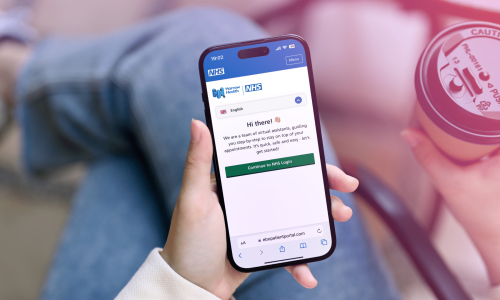
Patients now expect greater control over their healthcare experience, from managing appointments and completing questionnaires to accessing information about their care. In many ways, healthcare should be available in the palm of your hand.
At the same time, digital transformation must remain inclusive. Digital options should improve access, but that doesn’t always mean the right solution is digital for everyone.
One positive development has been the adoption of consistent NHS branding and accessibility standards. Clear, intuitive and recognisable digital experiences make navigation easier and help build trust with users.
You’ve worked closely with frontline teams throughout your career. What makes clinicians and operational teams actually trust and adopt new technology?
The magic formula is essentially an expansion on “desirable, viable and feasible.”
Clinicians and operational teams are more likely to adopt technology when it solves a meaningful problem, delivers clear benefits and has evidence to support its value. It also needs to be reliable, easy to use, adaptable to local needs and compliant with relevant safety and governance requirements.
Most importantly, the people who will use the technology should be involved throughout the decision-making, design and implementation process. Supplier reputation is also becoming an increasingly important factor when organisations assess new technologies.
Where do you think platforms like EBO’s Neighbourhood Health Hub can have the biggest impact?
I think the biggest impact comes from creating a genuinely connected and accessible experience for patients while reducing pressure on frontline teams.
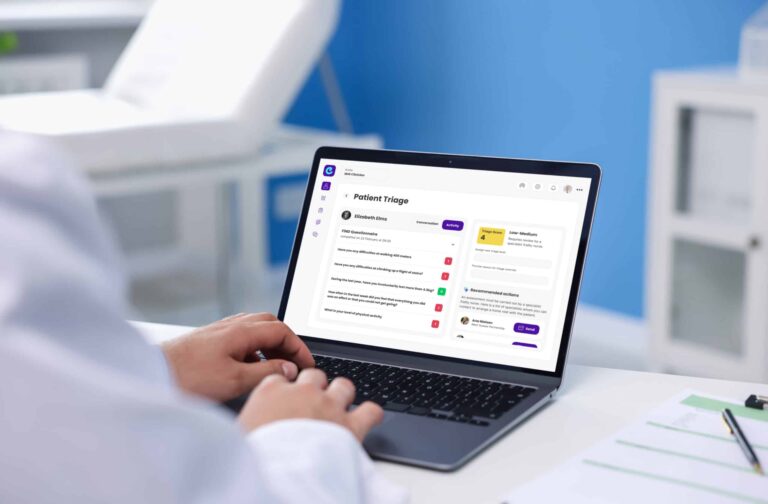
Neighbourhood healthcare depends on helping people access the right support at the right time, and that’s where digital solutions like EBO’s Neighbourhood Health Hub can make a real difference. By providing a simple digital front door, patients can navigate services more easily, manage appointments, complete assessments, access information and engage with care through a single, intuitive experience.
For healthcare teams, the value comes from automating high-volume administrative processes and routine interactions, freeing up capacity to focus on patient care.
Looking ahead, where do you think healthcare organisations should focus if they want transformation programmes to deliver long-term operational value rather than short-term wins?
Organisations need to think carefully about long-term ownership, support models, funding arrangements and governance. Questions such as who owns the contract, how support will be maintained and whether funding is sustainable are critical to long-term success.
A huge amount of effort goes into transformation programmes, so taking the time to anticipate risks and plan for sustainability is essential.
What advice would you give NHS leaders navigating AI and health technology adoption today?
Invest heavily in stakeholder engagement.
Creating time and space for meaningful collaboration with the people affected by change is one of the most valuable things a programme can do. Those conversations often uncover barriers, opportunities and solutions that might otherwise be missed.
Some of the challenges that determine long-term adoption may sit outside the original project scope, so it’s important to remain open to unconventional approaches. Transformation is about creating something different from the status quo, so don’t be afraid to think differently about how you achieve it.
For NHS organisations looking to strengthen patient engagement, improve service navigation and support Integrated Neighbourhood Teams through AI-powered automation, discover how EBO’s Neighbourhood Health Hub is helping turn neighbourhood health ambitions into reality.